

“Breath into the back ribs and side ribs….”
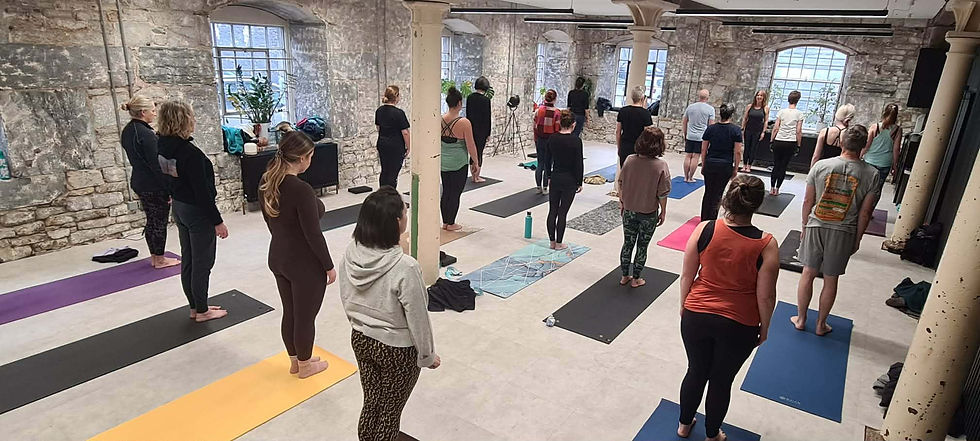
We always begin class with a few moments in samasthiti - arriving, letting the day fall away before we step into practice.
And I invite everyone to turn their attention to the breath. To breathe into the back ribs and the side ribs.
But why?
When the breath moves three-dimensionally, the diaphragm works fully, the ribs gain mobility, and the spine finds space.
But more importantly, the nervous system settles.
Shallow, upper-chest breathing is often a sign the body is in alert mode - tight, guarded, ready to react.
Back body breathing tells the system it’s safe.
Back body breathing softens the jaw.
It eases the neck.
It quiets busy thoughts.
In Ashtanga, we focus on bandha, drishti, vinyasa. Yet none of it lands without a breath that is three-dimensional.
When the back ribs inflate, the breath becomes supportive instead of effortful.
This is how we start practice- not by pushing, but by creating space.
We build gentle heat, move with rhythm, and return again and again to the breath that steadies everything….

nice text bro